
What Is PSYCH-K? Understanding How Subconscious Beliefs Can Shape Your Life
/
"I know what I need to do. So why do I keep repeating the same patterns?"
It's a question many people ask themselves.
Perhaps you've spent years reading books, attending therapy, practicing mindfulness, or learning positive thinking. These approaches can provide valuable insight, yet many people still find themselves struggling with the same fears, self-doubt, or emotional pain.
Why?
One possibility is that while our conscious mind understands what we want, our subconscious mind may still be operating from beliefs formed years—even decades—earlier.
That is where PSYCH-K may offer a different approach.
Developed by Rob Williams in 1988, PSYCH-K is a process designed to help people identify and change limiting subconscious beliefs that may no longer support the life they want to live. Rather than focusing solely on conscious effort or willpower, PSYCH-K works with the subconscious mind—the part of us that influences many of our automatic thoughts, feelings, habits, and behaviors.
Why the Subconscious Mind Matters
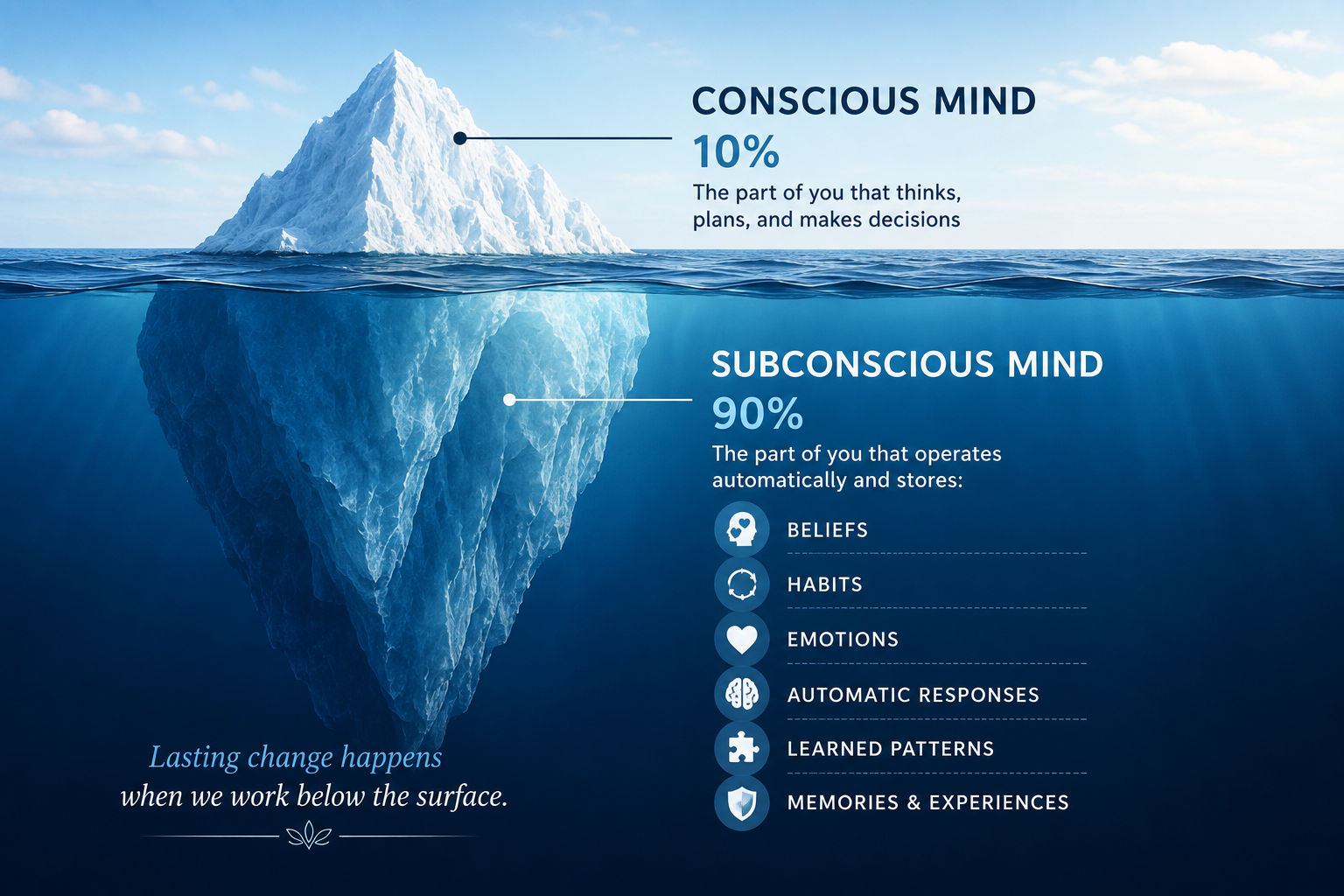
The iceberg is a helpful way to visualize the mind. While we are consciously aware of our thoughts and decisions, much of what influences our reactions, habits, emotions, and beliefs operates beneath the surface. This is why simply knowing what we want to change isn't always enough. Lasting change often requires addressing the subconscious patterns that quietly shape our lives.
Many researchers believe that much of our daily behavior is influenced by subconscious processes operating outside of our conscious awareness.
Throughout life, especially during childhood and emotionally significant experiences, we develop beliefs about ourselves and the world.
Some are empowering.
Others quietly limit us.
They may sound like:
I'm not good enough.
I don't deserve to be loved.
I'll never be successful.
I'm not safe.
I always have to take care of everyone else.
No matter what I do, it won't be enough.
Even when we consciously recognize these beliefs aren't true, they can continue influencing our decisions, emotions, relationships, and sense of self.
My View of Lasting Healing
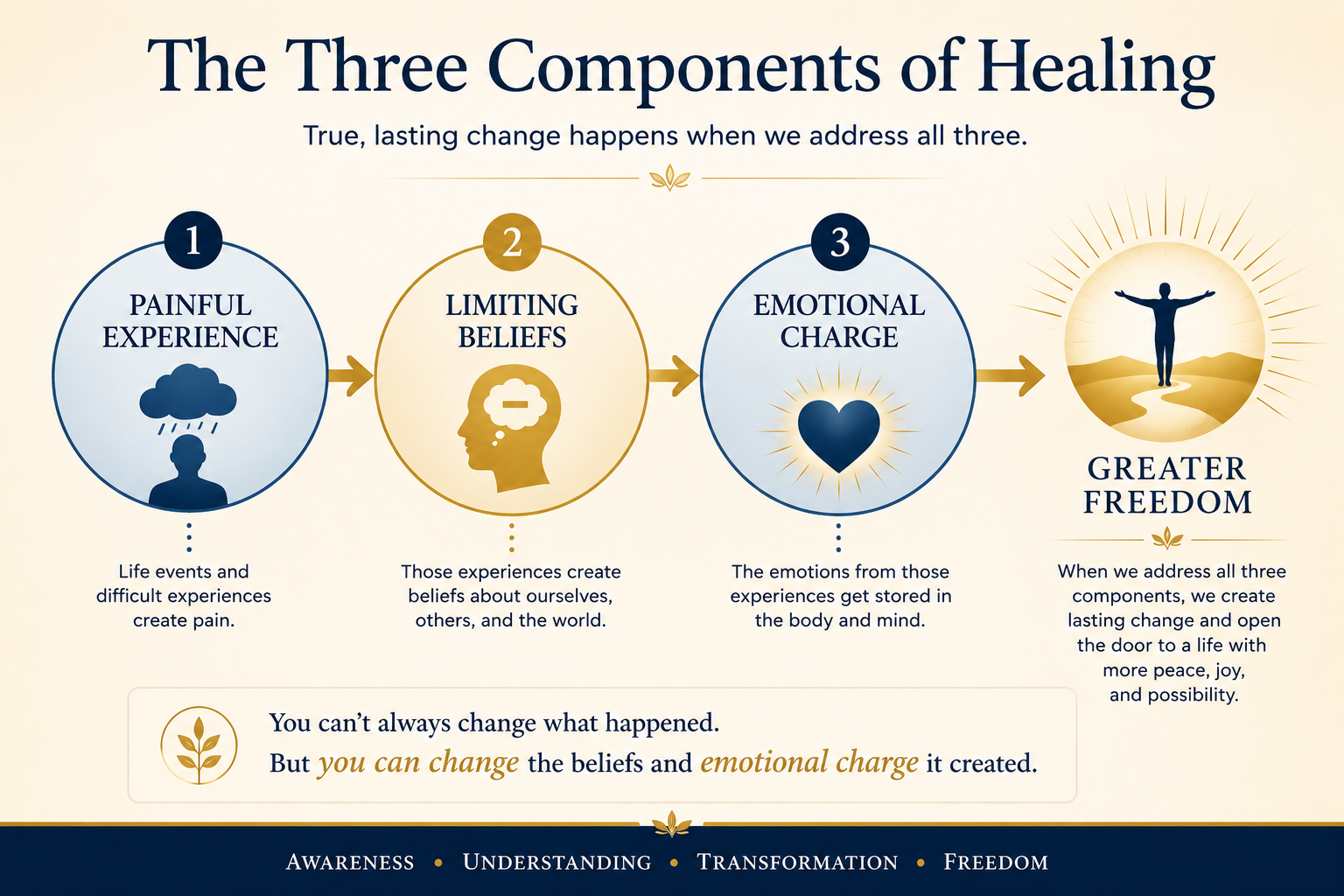
While every healing journey is unique, I've found that lasting transformation often involves more than understanding what happened. It also involves recognizing the limiting beliefs that grew from those experiences and reducing the emotional weight they continue to carry. When these three components are addressed together, many people find they are better able to move forward with greater peace, resilience, and freedom.
Over more than three decades of helping people heal and grow, I've come to believe that lasting change often involves addressing three interconnected parts of our experience:
1. The painful event itself.
Life brings experiences that leave deep emotional wounds.
2. The limiting beliefs that formed because of that experience.
For example:
"I wasn't important."
"It was my fault."
"I'm not worthy of love."
3. The emotional charge that remains connected to those memories and beliefs.
Many people discover that even after they understand what happened intellectually, the emotional intensity can still be triggered by reminders of the past.
In my experience, healing becomes possible when we begin addressing both the limiting beliefs and the emotional weight they continue to carry.
What Is PSYCH-K?
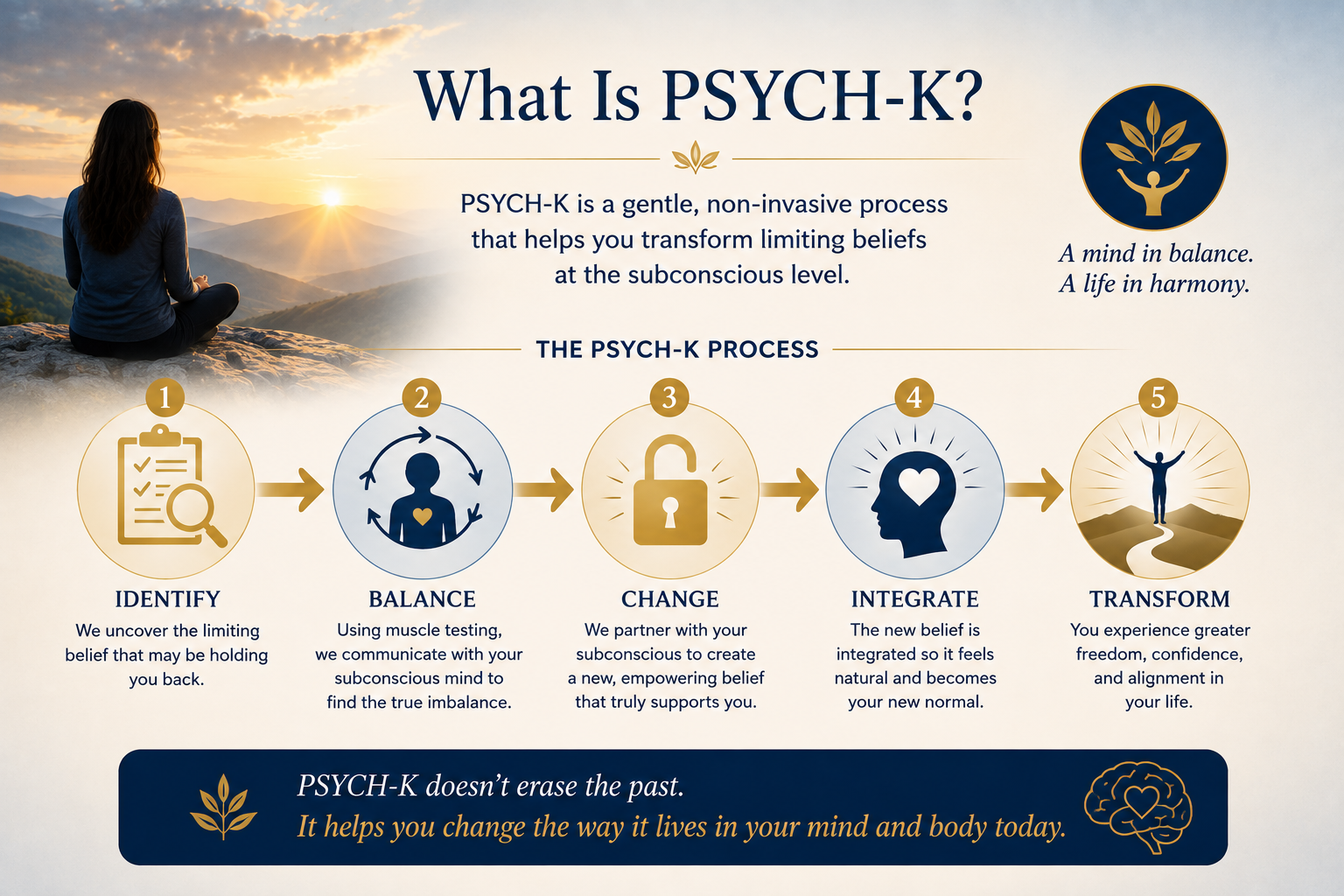
PSYCH-K (pronounced sike-kay) is a process developed by Rob Williams to help people change limiting subconscious beliefs into beliefs that better support their goals and well-being.
The process is collaborative.
You choose the goals you'd like to work toward.
You identify the beliefs you want to change.
A certified facilitator guides you through specific PSYCH-K balancing processes designed to support the integration of new, self-selected beliefs.
It is not about someone telling you what to believe.
It is about helping your subconscious mind become more aligned with what you consciously want for your life.
How Does PSYCH-K Work?
Although the specific balancing processes are unique to PSYCH-K, a session generally includes:
Clarifying your goals.
Exploring limiting subconscious beliefs.
Creating new supportive beliefs.
Completing one or more balancing processes.
Discussing ways to reinforce those changes in everyday life.
Many people describe the experience as calm, comfortable, and surprisingly simple.
Can Changing Beliefs Affect Emotional Pain?
One of the most meaningful experiences many people report is not forgetting painful events—but relating to them differently.
The memory often remains.
What may change is the emotional intensity connected to it.
Many clients describe feeling less emotionally triggered by experiences that once produced fear, shame, anger, or sadness. Instead of feeling trapped by the past, they often find themselves responding with greater calm, perspective, and freedom.
Individual experiences vary, and no outcome can be guaranteed. However, helping people loosen the emotional grip of limiting beliefs is one of the reasons many choose to explore PSYCH-K.
What Can PSYCH-K Help With?
People use PSYCH-K to support many areas of personal growth, including:
Building self-confidence
Increasing self-worth
Improving relationships
Reducing stress
Navigating life transitions
Overcoming limiting beliefs
Enhancing performance
Supporting emotional resilience
Creating healthier habits
Personal and spiritual growth
PSYCH-K is intended as a personal growth process and is not a substitute for appropriate medical or mental health care.
Is PSYCH-K the Same as Therapy?
No.
Therapy often focuses on understanding experiences, processing emotions, and developing coping strategies.
PSYCH-K focuses primarily on identifying and changing subconscious beliefs that may be contributing to current patterns.
Many people find that the two approaches complement one another.
Common Questions
Is PSYCH-K hypnosis?
No. During a session you remain fully awake, aware, and in control.
Is PSYCH-K a religion?
No. People of many different religious, spiritual, and non-religious backgrounds use PSYCH-K.
Can PSYCH-K be done online?
Yes. Certified facilitators can guide sessions remotely using secure video conferencing.
Will I have to relive painful memories?
Not necessarily. While discussing past experiences may sometimes provide helpful context, the focus is generally on creating supportive subconscious change rather than repeatedly revisiting painful events.
Is PSYCH-K scientifically proven?
Research continues to grow regarding neuroplasticity, subconscious processes, and the brain's ability to change throughout life. Research specifically evaluating PSYCH-K is more limited. Many practitioners and clients report meaningful personal changes, while additional high-quality research would help further clarify the effects of the process.
Is PSYCH-K Right for You?
If you've ever felt like you understand your challenges but still struggle to change them, you're certainly not alone.
Insight is valuable.
Awareness is important.
But sometimes lasting transformation also involves changing the subconscious beliefs that quietly influence how we see ourselves and respond to life.
For many people, that becomes the missing piece.
Final Thoughts
One of my favorite truths about healing is this:
The past cannot be changed.
But the meaning your subconscious mind continues to give it can.
When limiting beliefs begin to change, many people discover that the emotional weight of past experiences also begins to soften. The memories remain part of their story, but they no longer have to define who they are or dictate how they move through life.
My hope is that every person comes to see themselves through the eyes of truth rather than through the beliefs created by their pain.
Because healing isn't about becoming someone new.
It's about rediscovering who you were before those limiting beliefs took root.
If you're curious whether PSYCH-K may be a good fit for your journey, I invite you to schedule a free 20-minute Strategy Call. Together, we'll explore your goals and discuss whether this approach aligns with what you're seeking.
Continue Learning
If you found this article helpful, you may also enjoy these related resources:
🧠 Why Do Trauma Patterns Repeat in Your Life?
Learn how subconscious beliefs and survival responses can quietly shape recurring patterns in relationships, emotions, and everyday life.
🌿 Is Trauma Permanent? Healing Can Change Its Hold
Discover why healing isn't about erasing the past—it's about changing the way it influences your present.
💬 PSYCH-K Versus Talk Therapy for Lasting Change
Compare two different approaches to healing and understand how they can complement one another.
Ready to Take the Next Step?
If you're curious whether PSYCH-K may be a good fit for your goals, I'd be honored to help.
Schedule a Free 20-Minute Strategy Call, and together we'll explore your questions, discuss your goals, and determine whether this approach is right for you.